About Luis Alberto Camargo
Director of OpEPA · Senior Advisor in Regeneration and Systemic Transformation · Co-founder of Global Change Networks.

I am Luis Alberto Camargo, founder and director of the Organization for Environmental Education and Protection – OpEPA. For over 25 years, I have dedicated my life to reconnecting people, especially children and young people, with nature, understanding that this relationship is essential to transforming education, regenerating our territories, and building sustainable communities.
I help leaders and organizations strengthen their purpose and activate their regenerative potential — using nature as the most powerful model of systemic transformation that exists.
30 years building ecosystems of change in education, business and territory. From Colombia to the world.
I founded OpEPA in 1998, at the age of 29, during the height of the armed conflict in Colombia. In that challenging context, I spearheaded environmental education programs in territories affected by violence, helping thousands of young people reconnect with their natural environment, learn in the field, explore, play, and discover. Since then, I have led the growth of this vision into an international movement with a presence in multiple countries and global networks, such as the International Union for Conservation of Nature (IUCN).
My work has focused on creating regenerative learning systems. I have been part of the founding of initiatives such as The Weaving Lab, Catalyst NOW, and Regenerative Colombia, networks that bring together thousands of social innovators, educators and community leaders who believe in the power of systemic change.
I have had the opportunity to contribute from global platforms such as the World Economic Forum, where I was recognized as Young Global Leader in 2008, and I received the Richard Louv Prize for Innovation in Nature Connection (2023) for my contributions to nature-based education. That same year, OpEPA received the WISE Award from Qatar Foundation for its Nature-Based Education Networks project.
In addition to my experience as a founder of organizations, I served as an advisor to the Colombian Ministry of Environment (1993-1994), and I am a member of the Council of the Regenerative Communities Network and South America Regional Vice Chair of the IUCN Commission on Education and Communication. I hold a degree in Mechanical Engineering from Lehigh University and a Master's degree in Computer Graphics from the Pratt Institute in New York. I have complemented my training with leadership programs at Harvard Kennedy School and INALDE, and I have also served as an outdoor leadership instructor with the National Outdoor Leadership School (NOLS).
All my initiatives are grounded in a regenerative, biocentric, and collaborative vision, where working with communities, organizations, and governments intertwines to activate the potential for positive change. I firmly believe that the transformation we need must begin with our connection to the Earth and that it is possible to design futures that honor life, diversity, and collective well-being.
Today I continue to promote an education that not only teaches, but transforms; that awakens awareness, strengthens bonds and prepares new generations to care for the planet from the heart, mind and action.

Areas of focus
Environmental education
Social and ecological regeneration
Sustainability and climate change
Educational innovation and
systems transformation
Advocacy and public policies
International leadership and
global collaboration
Environmental Education Projects
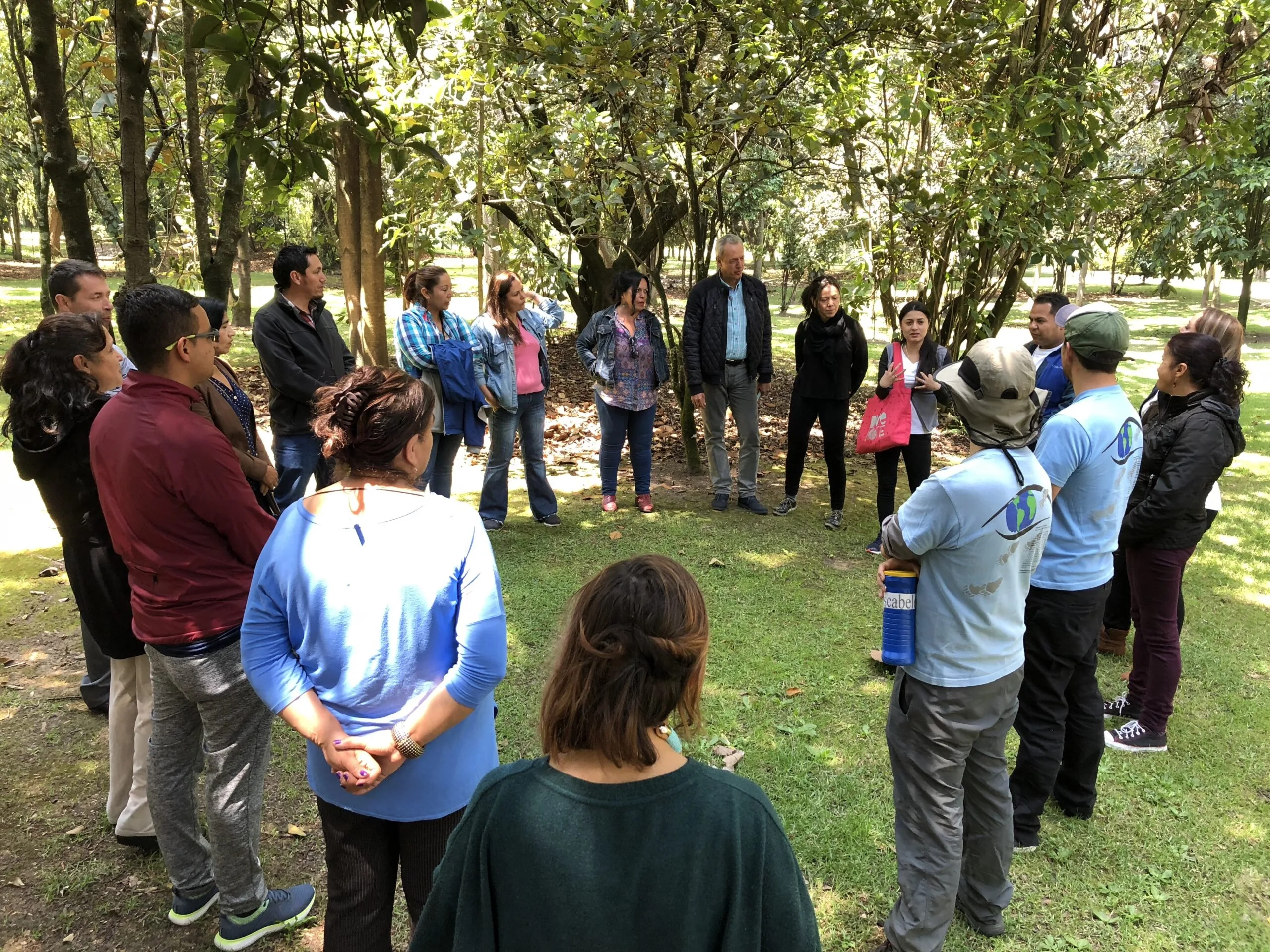
For over 25 years, my work in environmental education has stemmed from a simple yet powerful conviction: when children and young people have profound experiences with nature, they change. Their way of learning, relating to others, and understanding their place in the world changes.
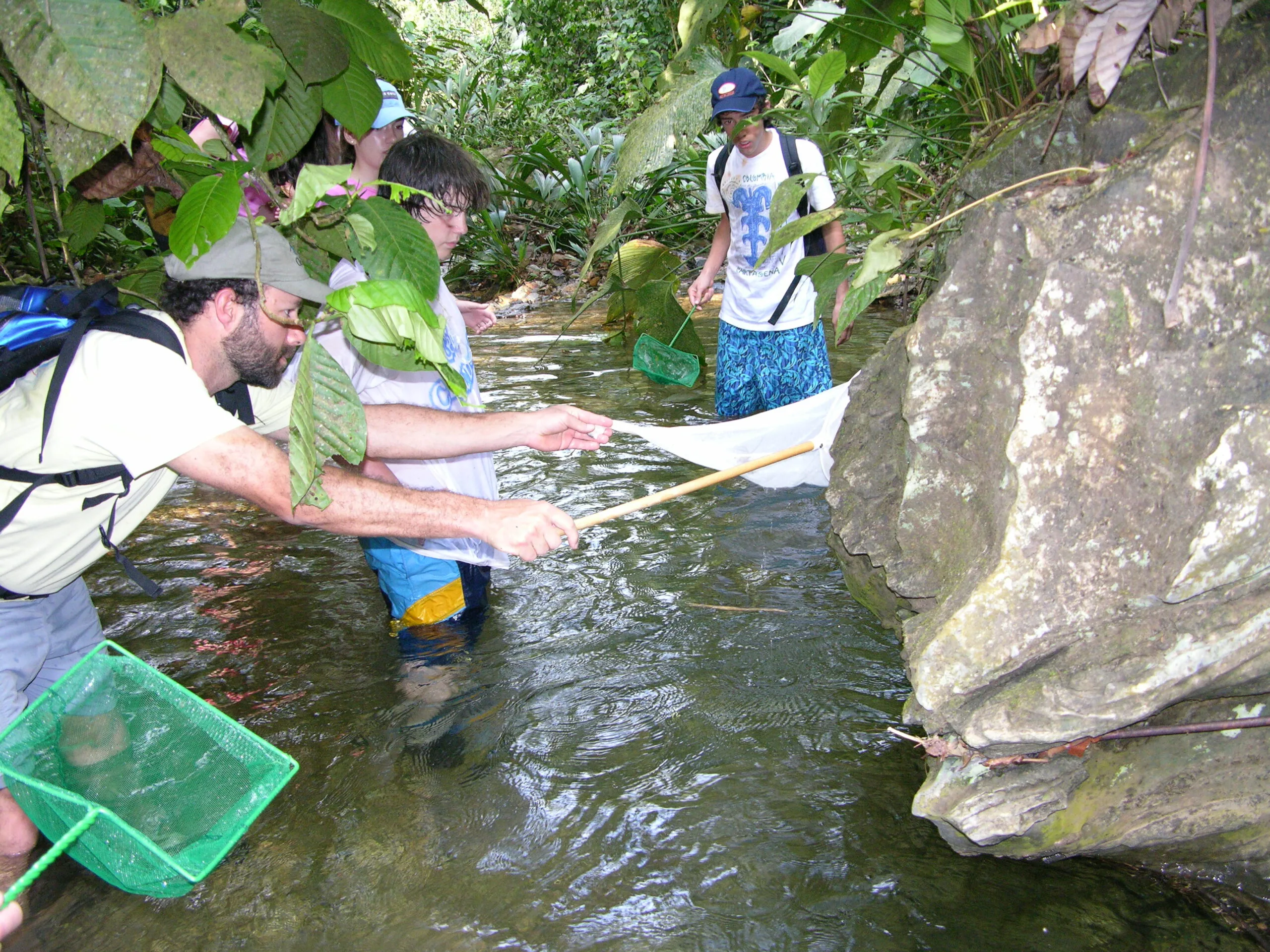
At OpEPA, we have developed programs, methodologies, and educational pathways that bring education to the countryside, rivers, high-altitude wetlands, and ecosystems of Colombia and Latin America. We have trained thousands of teachers and supported hundreds of schools in developing regenerative school environmental projects (PRAE).
Among our most relevant projects are the Network of Schools with the Humboldt Institute, the Camino Nature Camp programs and the Nature-Based Education methodology. Our Nature-Based Education Networks project received the 2023 WISE Award from Qatar Foundation.
Social and ecological regeneration projects
Regeneration is not only ecological—it is also social, cultural, and human. I believe we cannot separate ecosystem restoration from the healing of community ties. That is why my work in this field connects territorial restoration practices with processes of building identity, belonging, and local governance.
I have co-founded and supported initiatives such as Colombia Regenerativa and The Weaving Lab, spaces where social innovators, community leaders, and grassroots organizations work together to build frameworks for the transition to regenerative cultures. These projects operate from a biocentric vision that recognizes the interdependence between human well-being and the health of ecosystems.
This work has been carried out in rural and peri-urban territories of Colombia, with special attention to communities affected by armed conflict, loss of biodiversity and social fragmentation.
Sustainability and Climate Change Projects
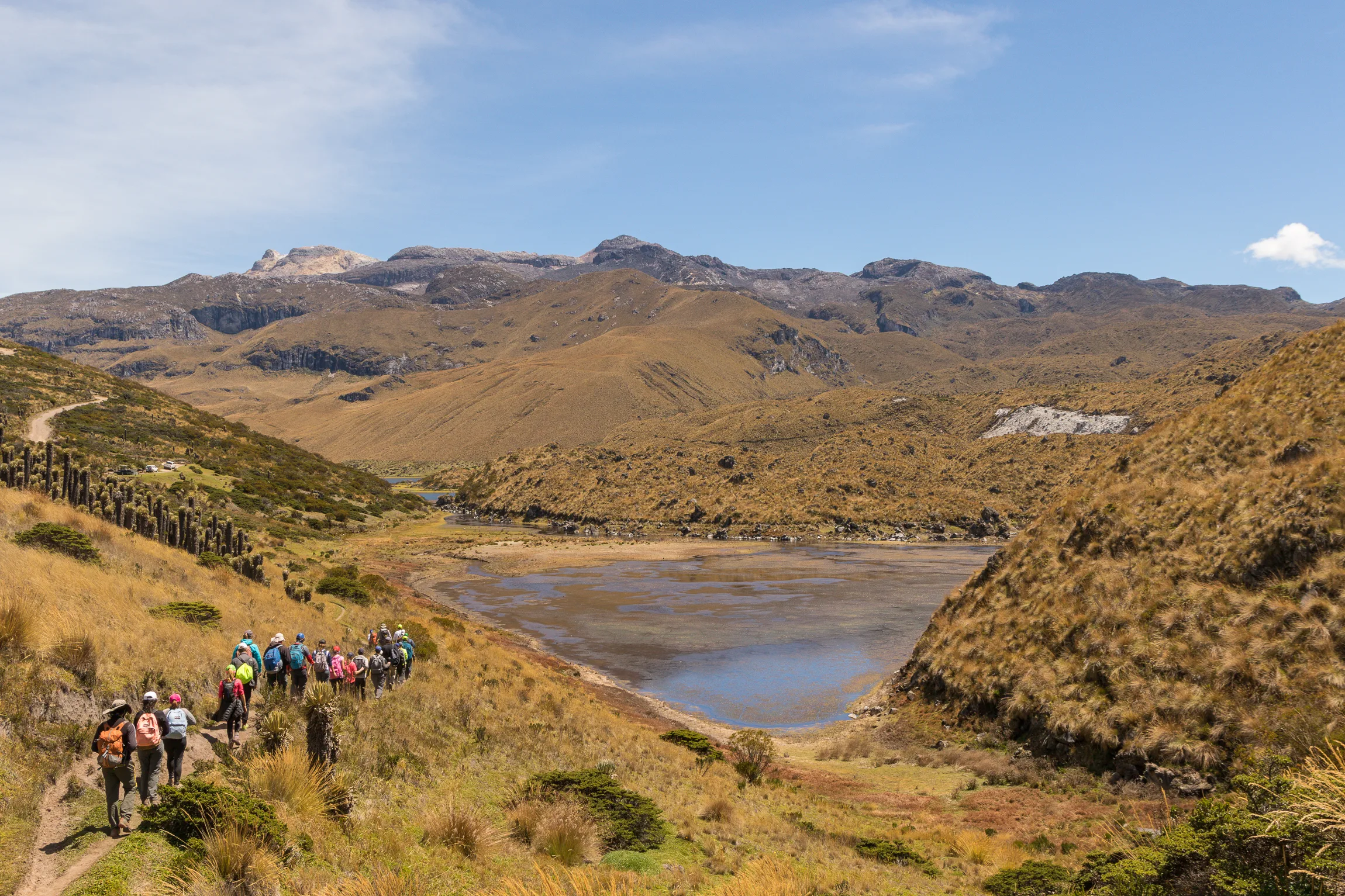
The climate crisis requires responses that integrate science, education, and community action. In my role as an advisor, facilitator, and network leader, I have worked to connect the global climate agenda with the realities and capacities of local communities.
I have actively participated in spaces of the IUCN, the World Economic Forum and platforms such as Catalyst NOW, where sustainability is addressed not only as a reduction of impacts, but as a structural transformation of our educational, economic and cultural systems.
My projects in this field include designing climate leadership training programs for young people, building networks of environmental educators for climate action, and developing educational materials that translate the complexity of climate change into meaningful learning and possible local action.
Educational Innovation and Systems Transformation Projects
Conventional education systems were designed for a world that no longer exists. Transforming them requires pedagogical innovation, but also a profound change in the assumptions about what learning is, what education is for, and who the subjects of knowledge are.
I have co-created and led educational innovation projects that challenge the traditional school model and propose alternatives based on experiential learning, systems thinking, and connection with the living environment. Together with Silviva (Switzerland) and other global organizations, I have contributed to the development of frameworks and tools for outdoor education and place-based learning.
I firmly believe that the most powerful educational innovation comes not from technology, but from restoring the relationship between learning, life, and the land. These initiatives have been recognized by the Richard Louv Prize for Innovation in Nature Connection and published in international academic networks for environmental education.
Advocacy projects and public policies
Influencing public policy is one of the most lasting ways to generate change. My work in this field has sought to translate decades of field experience and community learning into regulatory frameworks and policy strategies that strengthen environmental education at the national and international levels.
Between 1993 and 1994 I advised the Colombian Ministry of Environment on the design of environmental education strategies, and I have contributed to public policy processes from spaces such as the IUCN Commission on Education and Communication, where I am South America Regional Vice Chair.
I have also participated as a voice of civil society in UN forums, OECD platforms and spaces of the World Economic Forum, contributing perspectives from the global south on how sustainability and education policies should respond to the realities and knowledge of the territories.
International Leadership and Global Collaboration Projects
One of my deepest convictions is that the challenges of our time cannot be solved by a single organization, discipline, or country. Global collaboration, based on trust and a shared vision, is one of the most powerful resources for systemic change.
Since 2008, when I was named a Young Global Leader by the World Economic Forum, I have cultivated international networks of leaders, educators, and innovators working at the intersection of nature, education, and social transformation. I have co-founded The Weaving Lab, Catalyst NOW, and Colombia Regenerativa, and I am an active member of networks such as #NatureForAll, the IUCN CEC, and the Ashoka Fellows community.
My approach in this field is that of a connector and facilitator of ecosystems: I identify synergies, weave strategic alliances, and accompany leaders and organizations to find their place within broader global movements of educational transformation and planetary regeneration.
Notable Awards and Recognitions
- 2025 - Mustard Seed Trust Fellow – Funding for Regenerative Initiatives
- 2023 - WISE Award – Qatar Foundation (to OpEPA)
- 2023 - Richard Louv Award for Innovation in Connecting with Nature
- 2021 - Salzburg Global Fellow for Transformational Leadership
Impact in numbers
Education and Agriculture — OpEPA
+7,000 teachers trained · +160,000 students impacted · +600,000 student days in nature
Territorial presence — OpEPA
OpEPA Colombia: Colombia, Chile, Peru, Panama, Costa Rica
OpEPA USA: United States and Europe
Global impact — International networks
IUCN CEC · The Weaving Lab · Regenerative Communities Network · Catalyst NOW
Presence and action on all continents.
Community of change
8 co-founded initiatives · +4,000 changemakers in Catalyst NOW · 130+ organizations in #NatureForAll
Featured media and publications

Each year, the WISE Awards, of the Qatar Foundation, recognize and promote six innovative and successful projects that address global educational challenges. In 2023, 404 projects were submitted or nominated, and a Colombian proposal made it…

As each year passes by, we have a chance to choose the direction towards which we as individuals and as society evolve. As a species, our “sapiens” difference is a critical component of this process. We as mammals have the capacity to think, reflect, learn, and intentionally exercise our will. We thus choose…

As each year passes by, we have a chance to choose the direction towards which we as individuals and as society evolve. As a species, our “sapiens” difference is a critical component of this process. We as mammals have the capacity to think, reflect, learn, and intentionally exercise our will. We thus choose…